

Features
Follow one grow, start to finish.
This is SporeDesk running on my own grows. Real cultures, real harvests, and real failures, straight out of my account. Here’s how a grow moves through it, from the first recipe to the last flush.
01Before anything grows
It starts with the recipe.
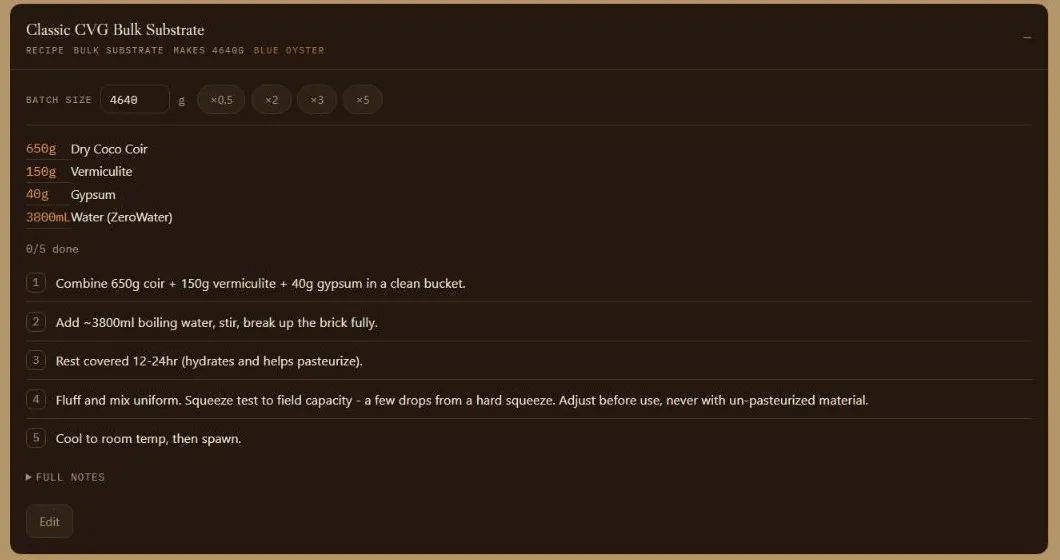
Every grow starts at the bench, so SporeDesk does too. Your agar, grain, and substrate recipes live in one library. Type a batch size, or tap ×2, and every ingredient recalculates. The steps check off as you go.
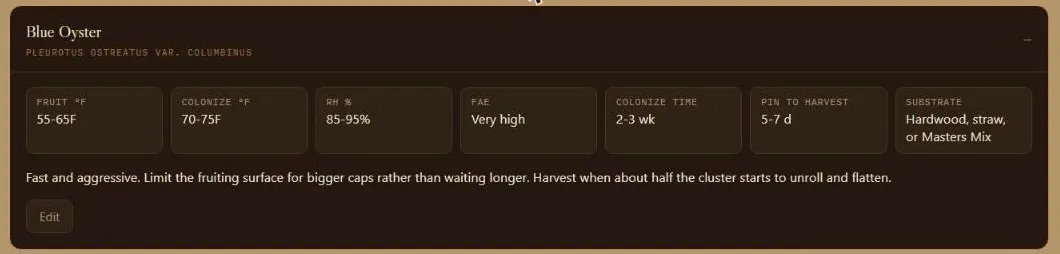
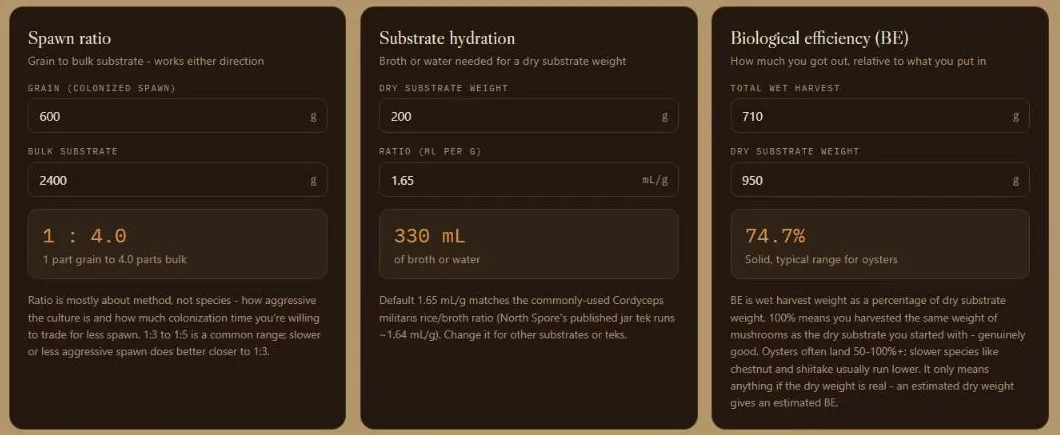
Right next to them: a cheat sheet for each species (temps, humidity, how long it should take) and the calculators I actually reach for. Spawn ratio, substrate hydration, biological efficiency, dry yield, and unit conversions.
02The shelf
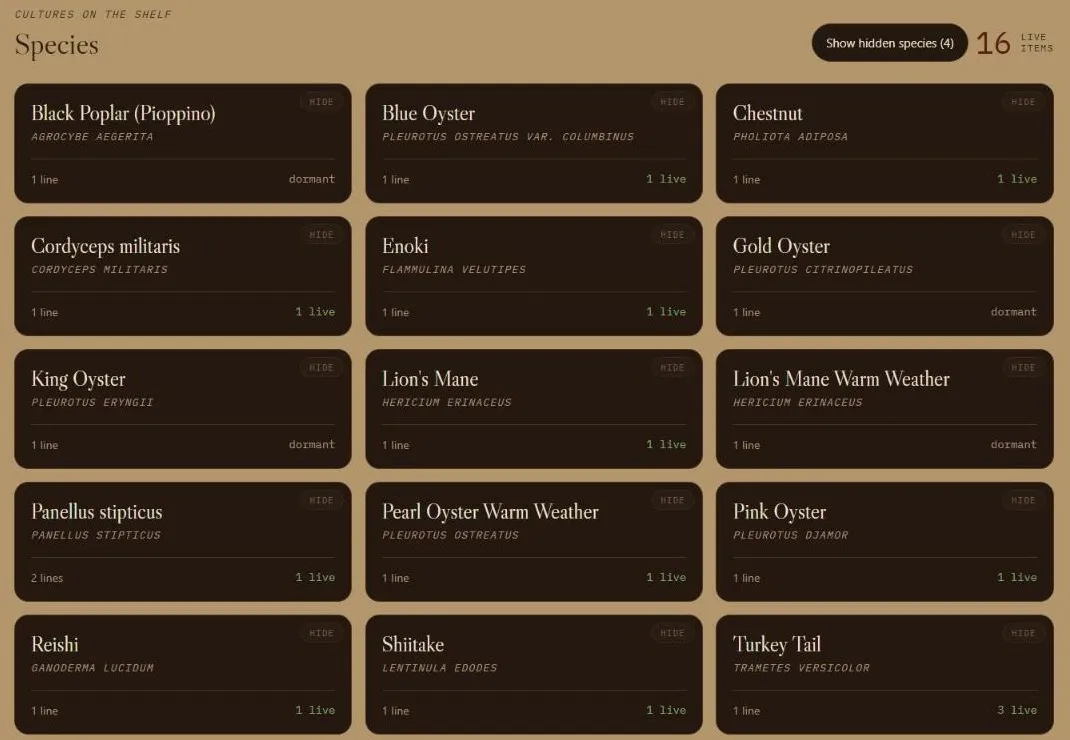
Every plate, jar, and bag is its own record.
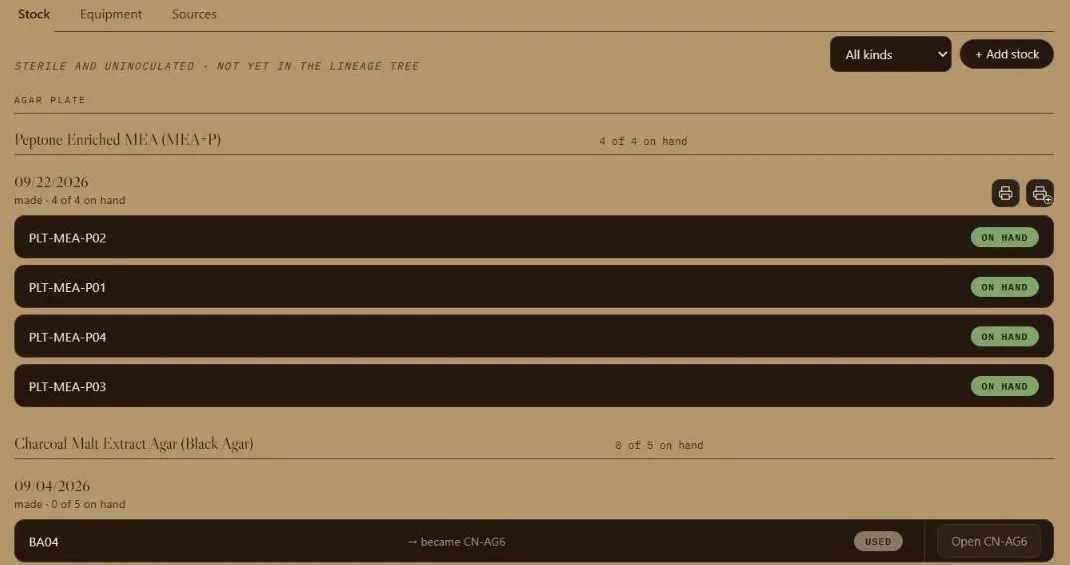
Pour a batch of plates or load a round of grain bags and each one gets logged as its own unit, with its own auto-numbered label, so you’re not inventing names at 11pm.
You can see what’s on hand at a glance. When a plate gets used, it says exactly what it became, and one tap takes you to that culture.
03Labels
Print it at the desk, scan it at the shelf.
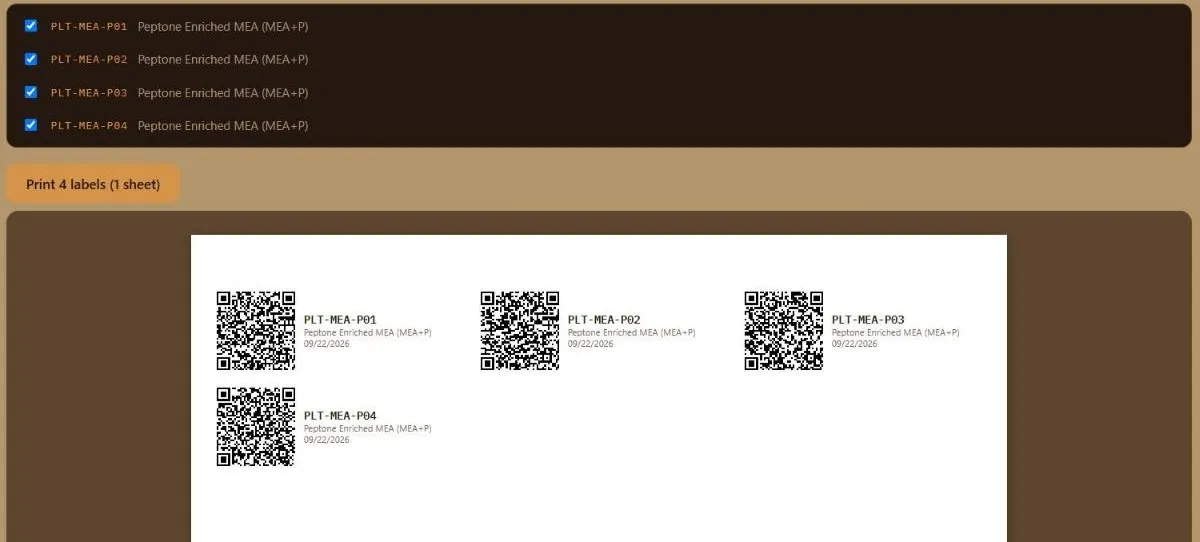
Print QR labels from your computer on standard address-label sheets, 30 to a page. Already used half a sheet? Tell it which label to start at and it skips the used ones.
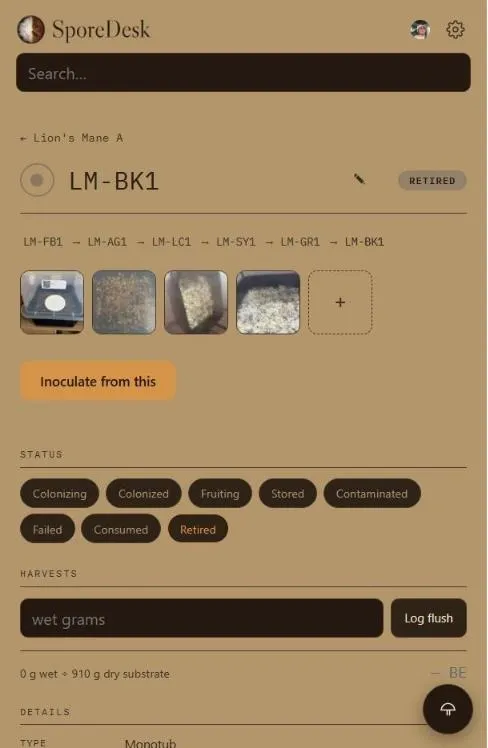
Stick one on the jar. Later, one scan with your phone opens that container’s whole record: where it came from, its photos, your notes, and what it turned into. Once a plate or bag gets used, its label follows through to the new culture, so there’s nothing to reprint.
04The grow
Then the tree takes over.
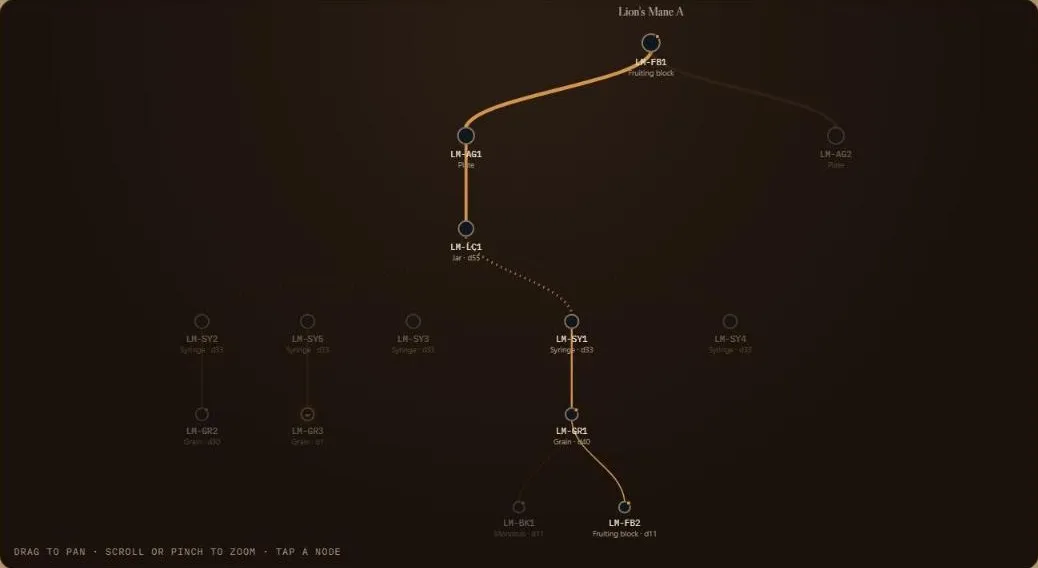
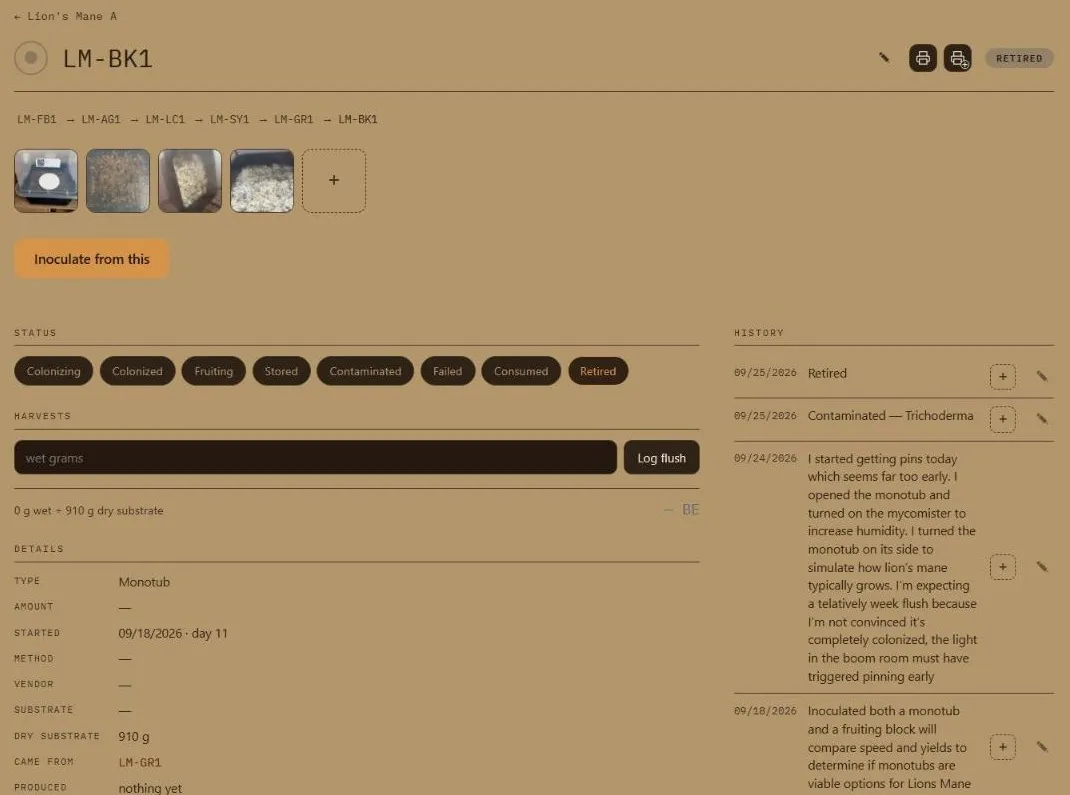
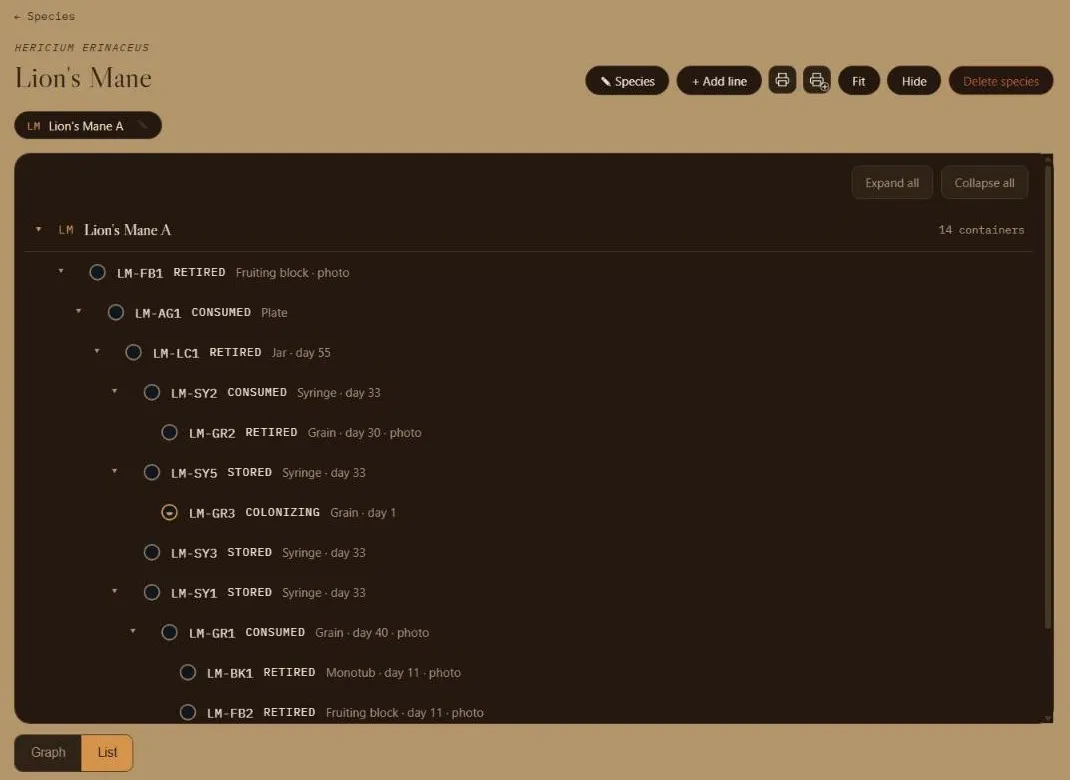
Every culture traces back to its source. Inoculate a grain bag from a syringe and SporeDesk draws the line. Over time you get the whole family, from a spore print or a purchase all the way down to the block on your shelf.
Tap any container for its status, history, and notes. Contamination and failure are logged separately, each with a reason, so a trich bag doesn’t get lumped in with one that just never took off.
Rather read than zoom? Flip the tree to a list: an indented outline with every container’s status spelled out.
Every photo, in one place
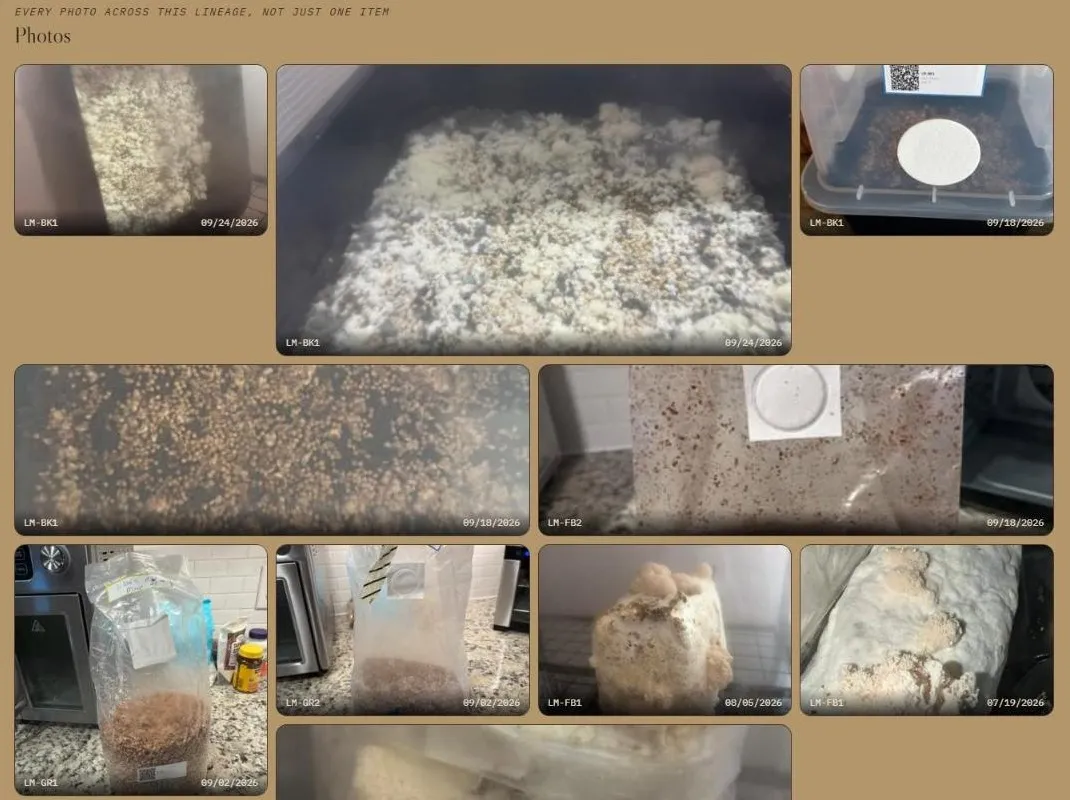
The photos you take along the way collect under the whole line, not buried inside one jar’s record. Scroll down a lineage and watch it go from a clean bag to a fruiting block.
05Harvest
Every flush becomes a lot.
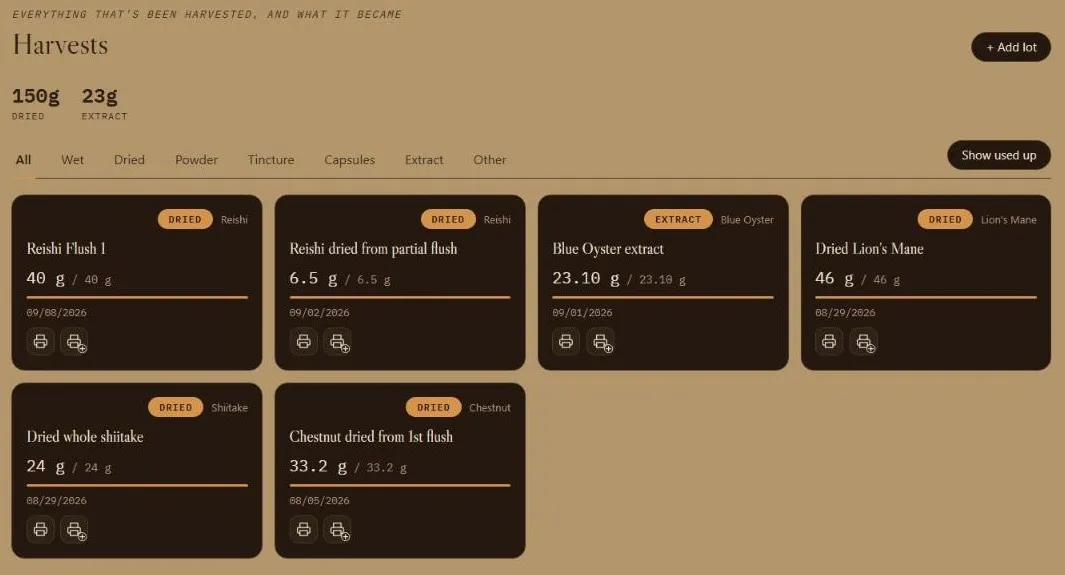
Log a flush on the block and it becomes a lot you can keep following. Dry it, powder it, blend it, extract it, or give some away. Every step keeps a record of what came from where.
How much is left is always worked out from what you’ve logged, so the numbers add up instead of drifting.
06The honest part
Then it tells you what’s actually working.
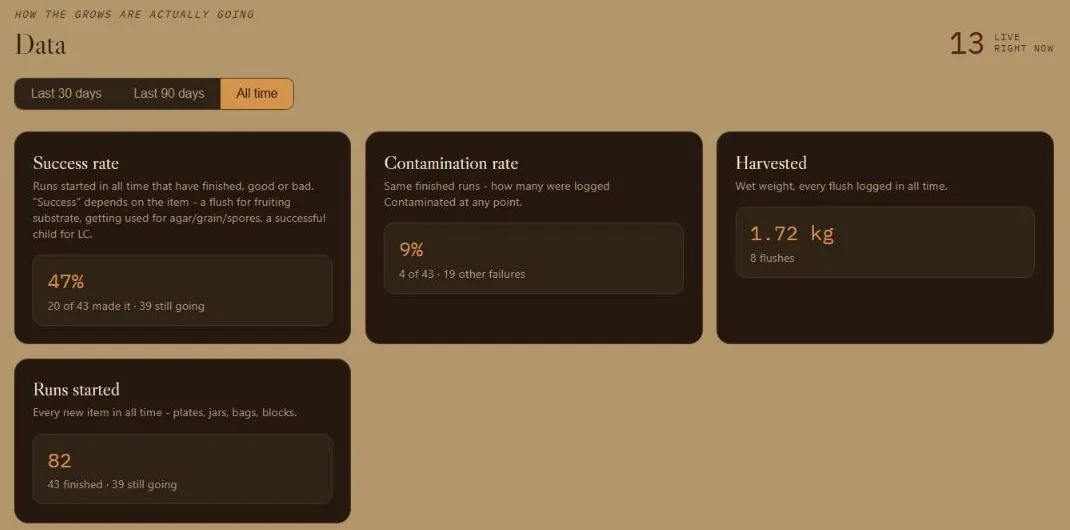
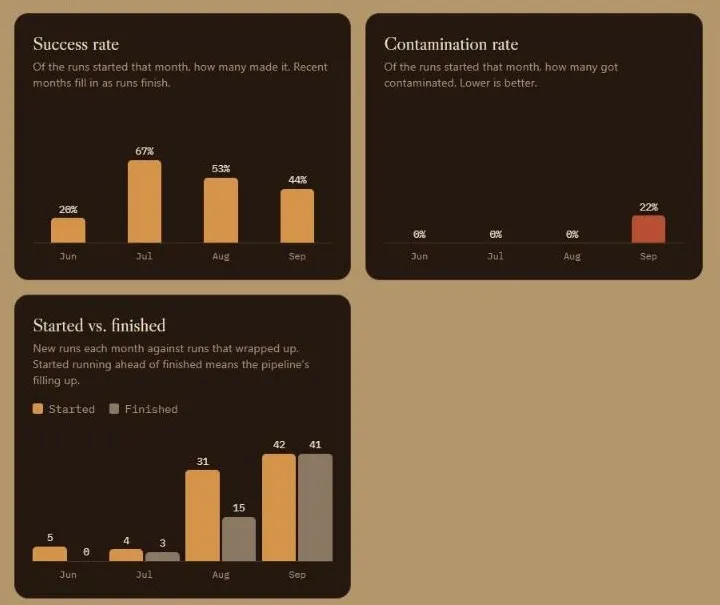
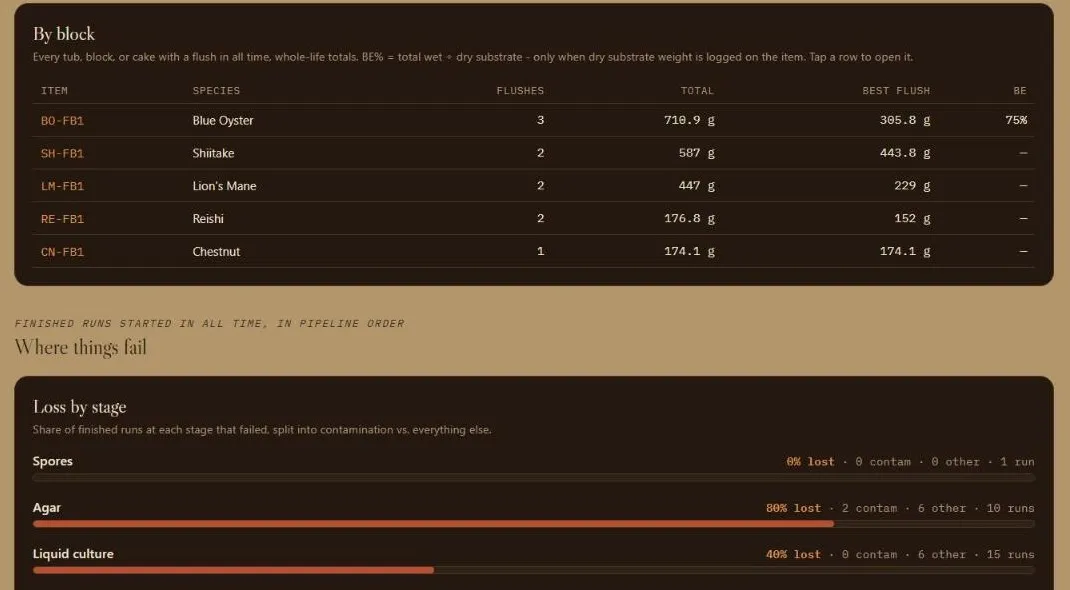
The Data tab turns everything you’ve logged into answers. Success and contamination rates, whether you’re getting better month to month, yield by block and by species, and where in the pipeline you lose the most runs.
Those are my real numbers. 47% success, and 80% of my agar work hasn’t made it. It stings a little to post that, but that’s the point: I’d rather know my plates are the weak spot than keep guessing.
And the small stuff
The things you only notice once you’re using it.
-
Quick-start species
Templates for 12 common species, so adding Blue Oyster doesn’t mean typing out its temps and timelines yourself.
-
Search that goes straight there
Type LM-GR3 or a recipe name and it jumps right to that jar, lot, or recipe.
-
Your units
Metric, imperial, or a mix of both. Pick once in Settings.
-
Photos without the baggage
Location data gets stripped out of every photo when you upload it.
-
Phone or computer
Works in any browser, and installs on your phone’s home screen like an app.
-
Easier on the eyes
Follows your device’s text size, with a higher-contrast mode, a reduce-motion setting, and that list view of the tree.
Private beta
Want to run your own grows through it?
SporeDesk is in private beta. Cohort 1 opens October 26 and is capped at 50 growers. You get the full app free for the beta, and I get honest feedback from people who actually grow.
Join the beta